

Global Pipe Processing Market to Reach $8.2 Billion by 2028: Key Trends Driving Growth
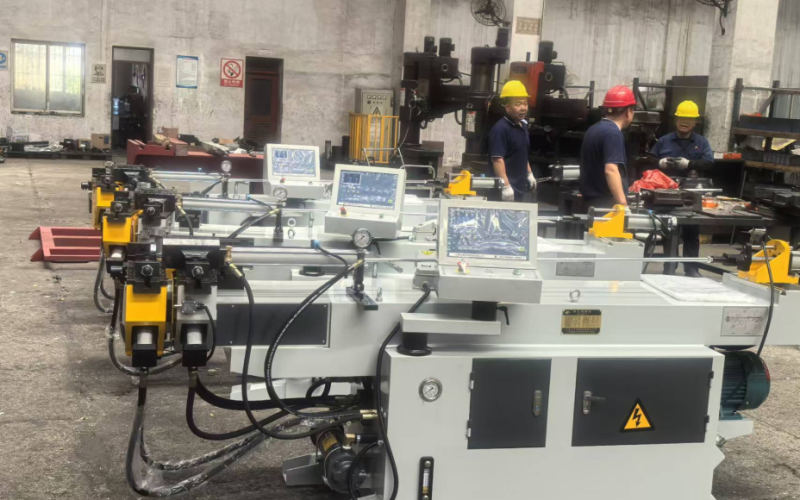
Market Overview
According to the latest industry research, the global pipe processing equipment market — encompassing bending, cutting, shrinking, chamfering, and forming machines — is poised to reach $8.2 billion by 2028, growing at a compound annual growth rate (CAGR) of 6.3% from 2024 levels.
Key Growth Drivers
Several macro trends are converging to fuel demand for advanced pipe processing machinery:
- Infrastructure Renewal: Governments across North America, Europe, and Asia-Pacific are investing trillions in aging water, gas, and district heating networks, all requiring precisely fabricated pipe systems.
- Automotive Lightweighting: The shift toward thinner-wall, high-strength steel and aluminum tubes in vehicle exhaust, chassis, and EV battery cooling systems demands tighter bending tolerances and burr-free cutting.
- HVAC & Refrigeration Expansion: Rising global temperatures and urbanization are driving record installations of air conditioning systems, with copper and aluminum tube processing at the core of condenser and evaporator manufacturing.
- Industry 4.0 Adoption: Manufacturers are upgrading from manual and semi-automatic equipment to CNC-controlled, IoT-connected systems that reduce scrap, improve traceability, and enable predictive maintenance.
Regional Highlights
Asia-Pacific remains the fastest-growing market, led by China and India, where rapid industrialization and construction activity are creating strong demand for both standard and specialized pipe processing equipment. Meanwhile, European manufacturers are focusing on energy-efficient machines that comply with tightening environmental regulations.
What This Means for Manufacturers
For pipe processing equipment buyers, the trend is clear: investing in CNC automation, multi-function machines, and servo-driven systems today will deliver significant competitive advantages in throughput, quality, and operating cost over the next decade.