
Servo-Electric vs. Hydraulic Pipe Bending: A Technical Comparison for Modern Manufacturing
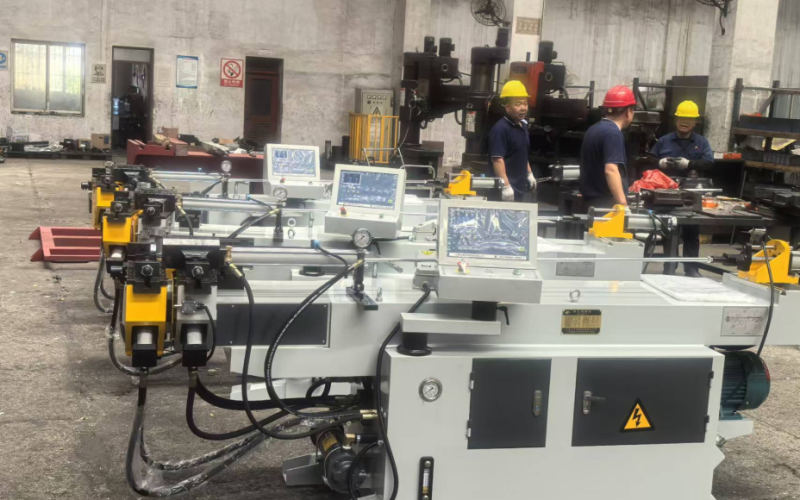
Two Technologies, One Goal
Pipe bending technology has evolved significantly over the past decade, with servo-electric drives emerging as a compelling alternative to traditional hydraulic systems. Both technologies produce high-quality bends, but they differ substantially in precision, energy consumption, maintenance requirements, and operational flexibility.
Servo-Electric Bending
- Precision: Direct-drive servo motors eliminate hydraulic compliance, achieving repeatability of ±0.05° — twice as accurate as typical hydraulic systems.
- Energy Efficiency: Consumes power only during motion, reducing electricity costs by 50–70% compared to hydraulic units that run pumps continuously.
- Maintenance: No hydraulic oil, filters, or hoses to replace. Annual maintenance cost is approximately 30% of an equivalent hydraulic machine.
- Speed: Rapid acceleration and deceleration enable cycle times 20–35% faster than hydraulic alternatives on repetitive short-run bends.
- Clean Operation: No risk of hydraulic oil leaks, making it ideal for cleanroom-adjacent and food-grade pipe fabrication environments.
Hydraulic Bending
- Force Capacity: Hydraulic systems excel when bending large-diameter, thick-wall pipes (above Φ76mm × 4mm) where the required bending torque exceeds practical servo motor sizes.
- Cost: Lower initial purchase price for equivalent tonnage, especially in the heavy-duty segment.
- Proven Reliability: Decades of field service in harsh industrial environments, with extensive global spare parts availability.
Choosing the Right Technology
For small-to-medium tube diameters (up to Φ50mm) in medium-to-high volume production, servo-electric is increasingly the preferred choice. For heavy-gauge structural pipe and shipbuilding applications, hydraulic remains the practical standard.
Stanch Machinery offers both servo-electric and hydraulic bending solutions, and our engineering team provides free application assessments to help customers select the optimal technology for their specific requirements.